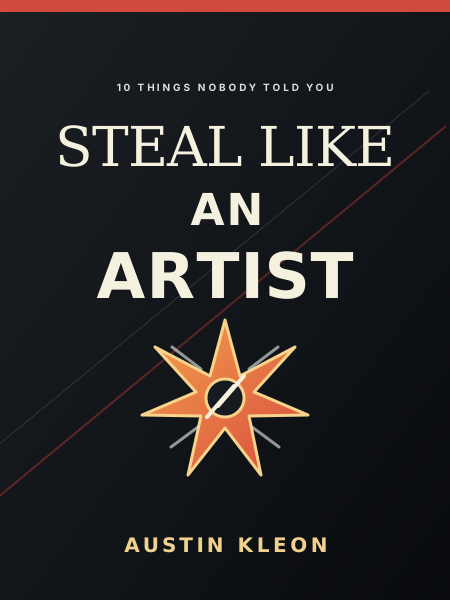
Steal Like an Artist
Austin Kleon · 2012
Editorial rating
- Evidence
- 3/10
- Actionability
- 7/10
- Originality
- 6/10
The thesis
Nothing is original - all creative work is remix and recombination. Stop worrying about being "authentic" or "original" and start stealing from your influences. Copy what you love, combine your inspirations, and through the act of copying you'll eventually find your own voice.
Who this is for
Beginning creatives paralyzed by "blank page syndrome," people afraid to start because they're not "original enough," and anyone who needs permission to be influenced by others rather than inventing everything from scratch.
My favorite quote
Start copying what you love. Copy copy copy copy. At the end of the copy you will find your self.
Why it matters
This reframes imitation from "cheating" to essential learning. You discover who you are by exploring what you love.
Do this
Today, pick one artist/creator you love. Copy one thing they do - a style, structure, technique. Notice what changes as you copy.
Start here
Steal selectively, not indiscriminately: Don't plagiarize or rip off - study your heroes, credit them, remix their ideas, and transform them into something new. The difference between a hoarder and an artist is that artists are selective. Collect what resonates, remix it with other influences, and make something that didn't exist before. Every artist is a mashup of their influences. Accept this, embrace it, and start creating.
Critical summary
Kleon, a writer and artist who creates "newspaper blackout poetry," wrote this as a manifesto for young creatives. It originated as a 2011 commencement speech at Broome Community College and became a viral blog post before expanding into a book. The message: creativity is combinatorial, not mystical. All ideas are remixes.
The book presents 10 principles in short, illustrated chapters:
- Steal like an artist (embrace influence)
- Don't wait until you know who you are to get started
- Write the book you want to read (make what you wish existed)
- Use your hands (work analog, not just digital)
- Side projects are important
- Do good work and share it
- Geography is no longer our master (you can work from anywhere)
- Be nice (the world is a small town)
- Be boring (routine enables creativity)
- Creativity is subtraction (constraints > limitless possibility)
Kleon's tone is permissive and encouraging - he gives readers permission to imitate, permission to start before they're "ready," permission to be imperfect. The book is heavily visual (hand-drawn illustrations, quotes, diagrams) and reads more like an inspirational poster series than a traditional book.
What it gets right
- Demystifies creativity: No need to be a "genius" - just collect, remix, repeat
- Gives permission: You don't need credentials or originality to start making things
- Practical tips: Concrete advice like "keep a swipe file," "steal from multiple sources," "share your process"
- Fast read: ~160 pages, large type, lots of white space - respects the reader's time
What it misses
- No depth: Each principle gets 10-15 pages max, mostly anecdotes and quotes
- Light on technique: "Steal like an artist" sounds great, but how? What's the process?
- Assumes beginner mindset: Once you're past the "afraid to start" phase, there's not much here
- Can feel glib: "Just start making things!" is easy to say, harder to execute
CRITICAL PROBLEMS
The title and central metaphor are provocative but misleading. Kleon isn't advocating theft - he's advocating study, influence, and remix. The provocative framing gets attention but invites confusion. Many critics (correctly) note that he's describing standard creative practice, not some radical new approach.
The book assumes creative work happens in a vacuum of pure choice. "Make the thing you wish existed!" sounds great if you're financially secure. If you're broke, you make what pays. Kleon's privilege (white, educated, working artist with support systems) goes unexamined.
Evidence is entirely anecdotal - personal stories, quotes from other artists, aphoristic wisdom. Zero research, zero data. It's motivational philosophy dressed as instruction. That's fine if you want inspiration, but don't expect skill-building.
The "steal from everyone" advice can enable derivative work if misunderstood. Kleon warns against plagiarism but doesn't deeply engage with where the line is. When does remix become ripoff? When does influence become imitation? These aren't easy questions, and the book treats them glibly.
Key concepts
Nothing Is Original
All creative work builds on what came before. Accept influence as inevitable and essential, not shameful.
1 + 1 = 3
When you combine two influences, something new emerges - the sum is greater than the parts. This is remix culture.
The Genealogy Tree
Your creative ancestors - the artists who influenced you, and who influenced them. You're part of a lineage, not inventing from scratch.
Steal from Multiple Sources
Copying one person is plagiarism; copying 100 is research. Remix many influences to find your voice.
Side Projects Are Where Breakthroughs Happen
The work you do for fun (no pressure, no audience) often leads to your best ideas.
Constraints > Freedom
"Do whatever you want" is paralyzing. Limits (time, materials, format) force creativity.
Core insights
-
Start before you're ready
You won't "find yourself" through introspection - you discover who you are by making things. Work clarifies identity.
-
Creativity is theft + honesty
Study your heroes, steal their techniques, then be honest about your influences. Credit them openly.
-
Analog work engages different parts of your brain
Using your hands (paper, pencils, physical tools) unlocks ideas that screens can't. Work away from computers sometimes.
-
Share your process, not just your results
People connect with works-in-progress and behind-the-scenes more than polished finished products. Show your work.
-
Boring routines enable wild creativity
You need structure (day job, regular hours, mundane tasks) to have energy for creative risks. Don't romanticize chaos.
Implementation steps
Today
- Make a "genealogy tree": List 5 artists who influence you, then 5 who influenced them. You're part of a lineage.
- Copy one thing from your favorite creator - a paragraph structure, a color palette, a technique. Just copy it. Notice what you learn.
This week
- Start a "swipe file": Save images, quotes, ideas that inspire you. When you're stuck, remix them.
- Share one work-in-progress: Show an unfinished sketch, draft, or prototype. Practice vulnerability.
This month
- Launch a side project with no commercial goal - pure play. Give yourself permission to experiment without pressure.
- Work analog for one week: Use paper, pencils, physical materials. Notice how your thinking changes.
Ongoing
- Credit your influences publicly: When you're inspired by someone, say so. Theft requires honesty.
- Be selective, not indiscriminate: Collect only what resonates. You're an artist (selective), not a hoarder (indiscriminate).
Suggested 30-day practice plan
An editorial application plan created by Monolithic Vault - an interpretation of the book's ideas, not part of the original book.
- Day 1
List your top 10 creative influences. Research who influenced them. Map your creative genealogy.
- Day 2
Copy something from your #1 influence - exactly. Notice where you deviate. That's your voice emerging.
- Day 3
Start a swipe file (folder, notebook, Pinterest board). Add 5 things that inspire you today.
- Day 7
Make something analog - draw, paint, sculpt, collage. No screens. Notice the difference.
- Day 14
Launch a side project - something purely for fun, no audience, no goal. Just make.
- Day 21
Share your process - post a work-in-progress, write about how you made something, show the messy middle.
- Day 30
Review your swipe file. Remix 3 ideas into 1 new thing. You're not copying - you're combining.
Free PDF summary
Take this analysis with you: a designed two-page field-notes sheet with the thesis, my favorite quote, the key concepts and core insights, and the full 30-day checklist. Print it or keep it - free, no signup.
Go deeper
If this analysis earned your attention, the full book goes further than any summary can. The original is always the primary source.