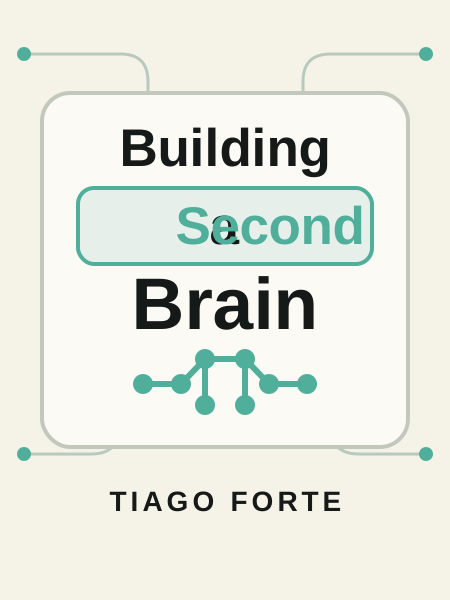
Building a Second Brain
Tiago Forte · 2022
Editorial rating
- Evidence
- 8/10
- Actionability
- 10/10
- Originality
- 9/10
The thesis
Our brains are for having ideas, not holding them. By creating a digital Second Brain, we can systematically capture, organize, and distill information so it's always ready for use. This moves us from "consuming" information to "creating" with it using the CODE framework.
Who this is for
Knowledge workers, writers, researchers, and anyone overwhelmed by the "digital deluge" of bookmarks, notes, and PDFs they never look at again.
My favorite quote
Your mind is for having ideas, not holding them.
Why it matters
It highlights the biological limitation of our biological memory.
Do this
Pick a note-taking app today (Notion, Obsidian, Apple Notes). Capture the next interesting idea you encounter there instead of trying to remember it.
Start here
Master the CODE Framework: 1. Capture: Keep only what resonates. 2. Organize: Organize for actionability, not by topic (PARA Method). 3. Distill: Use Progressive Summarization to find the "essence" of a note. 4. Express: Retrieve and combine notes to create new work.
Critical summary
Tiago Forte argues that we are currently living through a "Knowledge Revolution" where our ability to manage information determines our success. He introduces the PARA Method for organizing digital lives:
- P: rojects: Short-term efforts with a deadline.
- A: reas: Long-term responsibilities (Health, Finances).
- R: esources: Topics of interest.
- A: rchives: Completed items.
What it gets right
- Moving from "Library" mindset (storing info) to "Workshop" mindset (using info).
- Progressive Summarization: Highlighting the highlights so a note is readable in 10 seconds.
- The "Intermediate Packet": Breaking big projects into small, reusable assets.
Key concepts
CODE Framework
Capture what resonates, Organize for action, Distill the essence, Express your creativity.
PARA Method
Organize everything into Projects, Areas, Resources, or Archives based on actionability.
Progressive Summarization
Layer highlights on top of highlights to find the core of any note in 10 seconds.
Intermediate Packets
Reusable building blocks of work that can be combined into larger projects.
Implementation steps
Today
- The Inbox Clear: Move all current random notes into an "Inbox" folder.
- The First Capture: Save one article or quote into your digital system today.
This week
- Setup PARA: Create four folders (Projects, Areas, Resources, Archives) in your primary digital tool.
- Project List: List your current 3-5 active projects.
Suggested 30-day practice plan
An editorial application plan created by Monolithic Vault - an interpretation of the book's ideas, not part of the original book.
- Day 1
Choose your "Second Brain" tool.
- Day 7
Practice "Progressive Summarization" on 3 notes.
- Day 14
Complete one "Intermediate Packet" (a reusable piece of work).
- Day 30
Ship a finished product (article, report, project) using only your Second Brain assets.
Free PDF summary
Take this analysis with you: a designed two-page field-notes sheet with the thesis, my favorite quote, the key concepts and core insights, and the full 30-day checklist. Print it or keep it - free, no signup.
Go deeper
If this analysis earned your attention, the full book goes further than any summary can. The original is always the primary source.