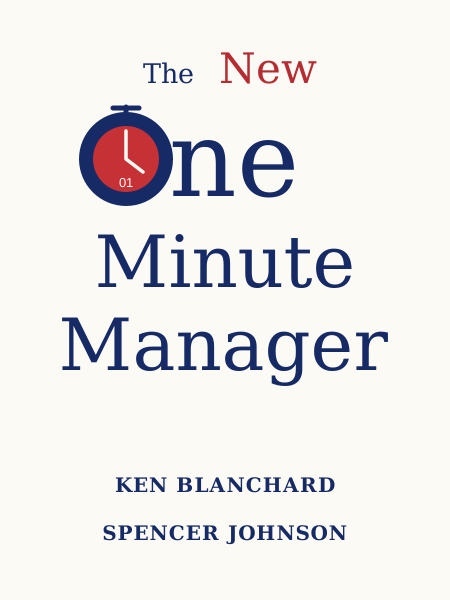

The New One Minute Manager
Ken Blanchard · 2015
Editorial rating
- Evidence
- 5/10
- Actionability
- 9/10
- Originality
- 5/10
The thesis
Effective management doesn't require hours of supervision and complex systems. Three simple techniques - one-minute goals, one-minute praisings, and one-minute re-directs - can transform your effectiveness as a manager while freeing you from the trap of micromanagement.
Who this is for
New managers drowning in the operational weeds, experienced leaders who've never formalized their approach to feedback, and anyone who finds themselves constantly putting out fires instead of developing their team.
My favorite quote
The best minute I spend is the one I invest in people.
Why it matters
Management gets reduced to tasks and deliverables. This reframes your most valuable time as the moments spent building capability in others - not doing the work yourself.
Do this
In your next 1:1, invest the first minute solely in understanding how your direct report is doing as a person, not just checking task status.
Start here
Master One Minute Goals: Sit down with each employee and agree on their 3-5 most important goals. Write each goal on a single page (250 words max) so it can be read in one minute. Include what good performance looks like and the deadline. Both manager and employee keep copies. This single practice eliminates 80% of management confusion - people know exactly what success means.
Critical summary
This 2015 update to the 1982 classic (15 million copies sold) adapts Blanchard and Johnson's timeless framework for modern work. The story follows a young professional seeking effective management wisdom, told as a parable where he learns three techniques from the "One Minute Manager."
What it gets right
The simplicity is the point. While critics call it "oversimplified," that's precisely its value. Management books often drown readers in frameworks. This book gives you three things to do and sends you on your way. The techniques work because they're executable immediately.
The updated version smartly shifts from "reprimands" to "re-directs," acknowledging that collaborative correction works better than top-down punishment in today's workplace. The emphasis on real-time feedback (not annual reviews) is now mainstream wisdom - but was revolutionary when first published.
The parable format makes it memorable. You'll remember "one minute praisings" long after forgetting the contents of weightier management tomes. The book respects your time - you can read it in an hour.
What it misses
The simplicity cuts both ways. Complex management challenges - organizational politics, systemic issues, difficult personalities - aren't addressed. The book assumes good-faith actors and straightforward situations.
The techniques can feel manipulative if applied mechanically. Praise that feels calculated or re-directs that follow a rote script lose their effectiveness. The book doesn't adequately address how to make these approaches feel genuine.
Evidence is primarily assertion and behavioral science references, not rigorous research. The business parable format, while memorable, can feel "cringe-worthy" to some readers who prefer direct instruction.
The foundational ideas aren't original - goal-setting, positive reinforcement, and constructive feedback predate this book by decades. Blanchard's contribution is packaging, not innovation.
Key concepts
One Minute Goals
Brief, clear statements of what success looks like. Write down goals in under 250 words with deadlines. Review them regularly together.
One Minute Praisings
Catch people doing something right. Praise immediately, specifically, and tell them how their behavior helped the team.
One Minute Re-Directs
When mistakes happen, address immediately. Confirm the facts, express how you feel about the error, pause, then reaffirm your confidence in the person.
Manager's Paradox
The best managers have lots of time because they've invested in making their people self-sufficient. Poor managers are always busy firefighting.
Goals Begin Behaviors, Consequences Maintain Them
Clear goals get people started; consistent feedback keeps them going. Both are necessary.
Core insights
-
Clarity prevents most performance problems
When people know exactly what's expected, most "performance issues" disappear. Vague expectations create failures that aren't the employee's fault.
-
Immediate feedback beats delayed reviews
Feedback delivered days after an event is infinitely more useful than feedback delivered months later at an annual review. Don't wait.
-
Praise is not weakness
Some managers think constant criticism shows high standards. The opposite is true - catching people doing things right builds confidence and motivation.
-
Separate behavior from person in re-directs
Criticize the action, not the individual. "This report was late" not "You're unreliable." This preserves relationship while addressing the issue.
-
One minute is a metaphor, not a prescription
The point isn't literal 60-second interactions but that effective management doesn't require hours of meetings and oversight.
Implementation steps
Today
- List your direct reports' top 3 goals. If you can't, that's your first problem.
- Catch one person doing something right and praise them specifically, immediately.
This week
- Schedule 30 minutes with each direct report to align on 3-5 written goals (250 words max each)
- Practice one re-direct using the full format: behavior → impact → pause → confidence
This month
- Create a habit of immediate feedback - both praise and re-directs within 24 hours of the event
- Review and revise goals with each team member
Ongoing
- Weekly: Review goal sheets with direct reports
- Daily: Find at least one person doing something praiseworthy
- As needed: Address problems immediately, not at scheduled reviews
Suggested 30-day practice plan
An editorial application plan created by Monolithic Vault - an interpretation of the book's ideas, not part of the original book.
- Day 1
Read the book (1 hour). Identify which of the three techniques you're worst at.
- Day 2
Draft one-minute goals for yourself. Model the behavior you'll ask of your team.
- Day 3
Schedule goal-setting conversations with each direct report this week.
- Day 7
Complete goal-setting with all directs. Each person should have 3-5 written goals.
- Day 14
Review: Have you praised someone specifically this week? Have you addressed a performance issue within 24 hours?
- Day 21
Check in with each direct on goal progress. Are the goals still the right ones?
- Day 30
Self-assessment: Are you spending more time developing people and less time firefighting? Adjust approach based on what's working.
Free PDF summary
Take this analysis with you: a designed two-page field-notes sheet with the thesis, my favorite quote, the key concepts and core insights, and the full 30-day checklist. Print it or keep it - free, no signup.
Go deeper
If this analysis earned your attention, the full book goes further than any summary can. The original is always the primary source.