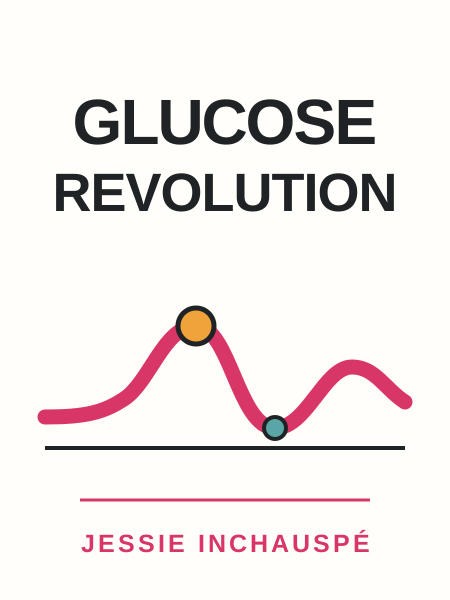
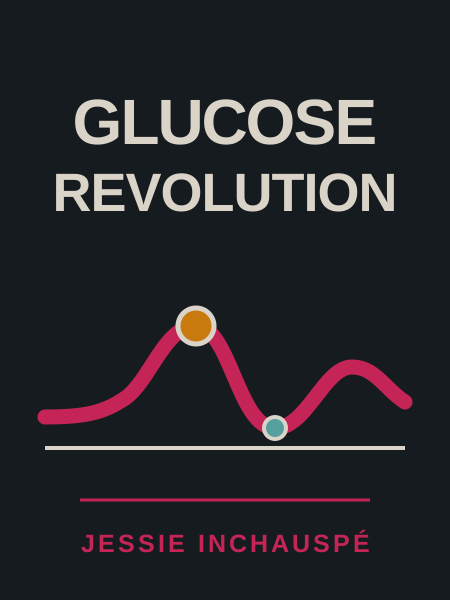
The Glucose Revolution
Jessie Inchauspé · 2022
Editorial rating
- Evidence
- 4/10
- Actionability
- 9/10
- Originality
- 5/10
The thesis
Blood sugar spikes - even in non-diabetics - cause weight gain, cravings, fatigue, and accelerated aging. By changing how and when you eat (not necessarily what), you can "flatten your glucose curves" and transform your health without dieting.
Who this is for
People experiencing energy crashes, afternoon slumps, or persistent cravings. Anyone who's tried diets and failed, looking for a non-restrictive approach. Those curious about the glucose monitoring trend but skeptical of complex protocols.
My favorite quote
It's not about eating less. It's about eating smarter.
Why it matters
This reframes health from deprivation to optimization. Small changes in eating order and timing can have outsized effects.
Do this
At your next meal, eat your vegetables first, then protein, then starches last. Notice if you feel more satisfied and less sleepy afterward.
Start here
Eat foods in the right order: Vegetables first, then protein and fat, then starches and sugars last. This simple change can reduce glucose spikes by up to 75% according to the author - though independent research shows more modest effects. Regardless of exact numbers, the principle is sound: fiber and protein slow carbohydrate absorption.
Critical summary
Jessie Inchauspé, a biochemist who goes by "Glucose Goddess" on Instagram, popularized continuous glucose monitoring insights for the general public. Her book presents 10 "hacks" to flatten blood sugar curves without eliminating any foods.
The premise is valid: glucose spikes trigger insulin, which promotes fat storage and inflammation. Repeated spikes may contribute to insulin resistance. Flattening curves could theoretically improve energy, reduce cravings, and slow aging.
What it gets right
- Highly actionable - specific, easy-to-implement techniques
- Non-restrictive approach is psychologically sustainable
- Food order principle has supporting research
- Vinegar before meals has some clinical evidence
- Makes glucose science accessible to general readers
What it misses
- Specific claims (75% spike reduction) are exaggerated - clinical studies show more modest effects
- Individual glucose responses vary enormously; these are generalizations
- Can promote orthorexic thinking - obsessing over every spike
- The "Anti-Spike Formula" supplement lacks clinical trials
- Oversimplifies: not all spikes are harmful, context matters
- Some advice (savory breakfast always) lacks nuance
The book is best used as a starting toolkit, not a comprehensive health strategy. The hacks work for many people, but the science is presented more definitively than warranted. Take specific numbers with skepticism; apply principles experimentally.
Key concepts
Glucose Spike
Rapid blood sugar rise after eating, followed by crash. The villain of this framework.
Glucose Curve
Visual representation of blood sugar over time. Flatter is better.
Food Order
Eating fiber → protein/fat → carbs in sequence. The core hack.
Vinegar Hack
1 tablespoon of vinegar in water before meals may reduce spikes by 20-30%.
Savory Breakfast
Starting with protein/fat instead of carbs sets metabolic tone for the day.
Clothing Your Carbs
Never eating naked carbs - always pairing starches with fiber, fat, or protein.
Core insights
-
Order matters more than elimination
You can eat the same foods with different effects by changing sequence. Start with vegetables.
-
Naked carbs are the enemy
Bread alone spikes glucose; bread with butter and vegetables doesn't. Always "clothe" your carbs.
-
Savory breakfast changes everything
Sweet breakfasts create cravings all day. Protein and fat in the morning stabilize energy.
-
Vinegar is surprisingly effective
Acetic acid slows gastric emptying. A tablespoon before carb-heavy meals has measurable effects.
-
Movement trumps everything
A 10-minute walk after eating is more powerful than any food hack. Muscles absorb glucose directly.
Implementation steps
Today
- At your next meal, eat vegetables first, wait a few minutes, then eat everything else
- If having dessert, have it immediately after a meal (not as a snack)
This week
- Switch to a savory breakfast for 5 consecutive days
- Try the vinegar hack before one carb-heavy meal (1 tbsp in water)
This month
- Implement 10-minute post-meal walks after dinner daily
- Audit your snacks: eliminate "naked carbs," always pair with protein or fat
Ongoing
- Default food order at every meal: vegetables → protein → starches
- Keep apple cider vinegar accessible for carb-heavy meals
- Notice your energy patterns and adjust based on personal response
Suggested 30-day practice plan
An editorial application plan created by Monolithic Vault - an interpretation of the book's ideas, not part of the original book.
- Day 1
Implement food order at lunch and dinner (veggies first)
- Day 2
Switch to savory breakfast (eggs, avocado, or protein smoothie)
- Day 3
Try vinegar hack before dinner (1 tbsp in water, 10-20 min before)
- Day 7
Begin post-dinner walks (10 minutes minimum); assess energy levels
- Day 14
Audit all snacks - eliminate naked carbs, add protein/fat pairings
- Day 21
Evaluate: fewer cravings? Better afternoon energy? Adjust what's working
- Day 30
Decide which hacks to keep permanently based on your body's response
Free PDF summary
Take this analysis with you: a designed two-page field-notes sheet with the thesis, my favorite quote, the key concepts and core insights, and the full 30-day checklist. Print it or keep it - free, no signup.
Go deeper
If this analysis earned your attention, the full book goes further than any summary can. The original is always the primary source.