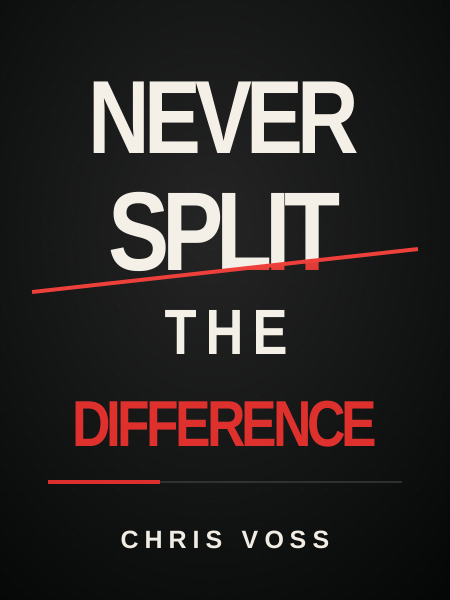
Never Split the Difference
Chris Voss · 2016
Editorial rating
- Evidence
- 8/10
- Actionability
- 10/10
- Originality
- 9/10
The thesis
Traditional "win-win" negotiation is a fantasy. Emotions drive decisions, not logic. By mastering tactical empathy, calibrated questions, and the "Late Night FM DJ" voice, you can get what you want in business and life without leaving money on the table.
Who this is for
Consultants negotiating scope, professionals seeking raises, and anyone tired of being "too nice" in difficult conversations.
My favorite quote
He who has learned to disagree without being disagreeable has discovered the most valuable secret of negotiation.
Why it matters
Negotiation isn't war; it's a process of discovery.
Do this
In your next disagreement, use a "Label": "It seems like you're concerned about the timeline." Then go silent. Let them fill the space.
Start here
Master Calibrated Questions. Instead of making demands, ask "How" or "What" questions that force the other side to solve your problem. Instead of: "That price is too high." Try: "How am I supposed to do that?" This gives the other side the illusion of control while you guide them toward your desired outcome.
Critical summary
Chris Voss, former FBI hostage negotiator, challenges traditional "rational actor" negotiation theory. Drawing from high-stakes kidnappings and bank robberies, he shows that emotions drive decisions and tactical empathy is more powerful than logic.
What it gets right
- The emphasis on listening as a negotiation weapon - people want to be understood first.
- Tactical empathy creates psychological safety and unlocks hidden information.
- The "Late Night FM DJ" voice technique for de-escalation.
What it misses
- Limited applicability to cultures with different communication norms.
- The risk of manipulation if tactics are used unethically.
Key concepts
Mirroring
Repeat the last three words of what the other person said. It builds rapport and forces them to elaborate.
Labeling
Identify an emotion ("It seems like you're worried...") to diffuse negatives and reinforce positives.
No is the Start
People feel safe when they say "No." Use it to your advantage: "Is now a bad time to talk?"
Implementation steps
Today
- Mirroring Practice: Use mirroring in 3 low-stakes conversations (with a barista, a friend, or a colleague).
This week
- Accusation Audit: Before a difficult meeting, list every negative thing the other person might think about you. State them upfront to defuse their power.
This month
- Calibrated Questions Drill: Replace all "why" questions with "how" or "what" questions for one week.
Ongoing
- Tactical Empathy: Begin every difficult conversation with a label that shows you understand their position.
Suggested 30-day practice plan
An editorial application plan created by Monolithic Vault - an interpretation of the book's ideas, not part of the original book.
- Day 1
Practice the "Late Night FM DJ" voice in the mirror.
- Day 7
Use mirroring in 5 conversations and note the results.
- Day 14
Practice labeling emotions in everyday conversations.
- Day 21
Run an accusation audit before a real negotiation.
- Day 30
Use calibrated questions to get someone to solve your problem for you.
Free PDF summary
Take this analysis with you: a designed two-page field-notes sheet with the thesis, my favorite quote, the key concepts and core insights, and the full 30-day checklist. Print it or keep it - free, no signup.
Go deeper
If this analysis earned your attention, the full book goes further than any summary can. The original is always the primary source.