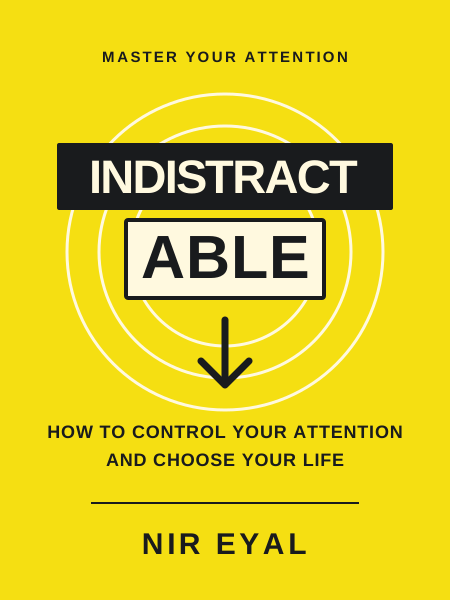

Indistractable
Nir Eyal · 2019
Editorial rating
- Evidence
- 7/10
- Actionability
- 8/10
- Originality
- 6/10
The thesis
Distraction is not a technology problem - it's a pain management problem. We escape discomfort through distraction. Master your internal triggers, schedule your values, hack external triggers, and create precommitments to become "indistractable."
Who this is for
Professionals who blame their phones for poor productivity but suspect the real problem runs deeper. Also parents concerned about children's screen time and teams struggling with meeting-heavy, interruption-rich cultures.
My favorite quote
Time management is pain management. Understanding that truth is the first step in learning to manage our time and, therefore, our distractions.
Why it matters
This reframes distraction from moral failure to emotional regulation challenge - opening solutions beyond "just try harder."
Do this
Next time you reach for your phone unconsciously, pause and name the uncomfortable feeling you're trying to escape.
Start here
Master Internal Triggers: Distraction is an escape from discomfort - boredom, anxiety, loneliness, fatigue. Before addressing external triggers (notifications), identify which negative emotions drive your distraction. Write them down when they occur. Once you name the discomfort, you can address it directly rather than numbing with scrolling.
Critical summary
Eyal's second book addresses what his first book (Hooked) helped create: a world of irresistible, habit-forming products. The irony isn't lost on critics, but Eyal addresses it directly - he argues that understanding how hooks work makes him uniquely qualified to help people escape them.
The four-part framework is solid: (1) master internal triggers (emotional regulation), (2) make time for traction (schedule your values), (3) hack back external triggers (reduce interruptions), (4) prevent distraction with pacts (precommitments). Each section offers specific tactics and tools.
What it gets right
- Internal triggers insight is the book's core contribution - blaming tech misses the point
- Timeboxing approach (schedule every minute) is concrete and testable
- Pact types (effort, price, identity) offer multiple commitment devices
- Sections on workplace distraction and raising indistractable kids add practical value
What it misses
- Lets tech companies off the hook by putting responsibility entirely on individuals
- No acknowledgment of problematic aspects of Hooked - reads as doubling down
- Some sections feel stretched and repetitive (parenting, relationships)
- Reads like compiled blog posts more than cohesive book
- Timeboxing every minute feels exhausting and unrealistic for many
Evidence is stronger than most productivity books - Eyal cites psychology research and behavioral science throughout. But the individual-responsibility frame ignores systemic issues.
Key concepts
Traction vs. Distraction
Both are about being pulled - toward or away from what you intend. Any action can be distraction if it's not what you planned.
Internal Triggers
The uncomfortable emotions (boredom, anxiety, fatigue) that drive distraction. Identify yours through journaling.
Timeboxing
Schedule every block of time, including leisure. What's on your calendar is traction; everything else is distraction.
Effort Pact
Make unwanted behavior harder (website blockers, phone in another room). Friction is your friend.
Price Pact
Create financial consequences for distraction (apps that donate money to causes you hate if you fail).
Identity Pact
Call yourself "indistractable" and act accordingly. Identity drives behavior more than willpower.
Core insights
-
Technology is the proximate cause, not root cause
People have always distracted themselves - with doodling, daydreaming, anything. Tech just made it easier.
-
You can't call something a distraction unless you know what it distracted you from
Without a clear plan, everything feels equally valid. Timeboxing creates the contrast.
-
10-minute rule beats cold turkey
When tempted, wait 10 minutes. The urge usually passes. Forbidding entirely backfires.
-
External triggers are mostly negotiable
Most notifications, interruptions, and meetings can be eliminated or reduced. Default to off.
-
Distraction in relationships is contagious
When one person pulls out their phone, others follow. Create phone-free zones and rituals.
Implementation steps
Today
- Track internal triggers: Note what emotion preceded each distraction
- Turn off all non-essential notifications on your phone
This week
- Timebox your ideal week including work, relationships, and self-care
- Identify your top three external trigger offenders and eliminate them
This month
- Implement one pact (effort, price, or identity) for your biggest distraction
- Have a "schedule sync" conversation with partner or family about protected time
Ongoing
- Review and adjust timebox weekly
- Adopt "indistractable" as identity - tell others, reinforce internally
Suggested 30-day practice plan
An editorial application plan created by Monolithic Vault - an interpretation of the book's ideas, not part of the original book.
- Day 1
List your top 5 distraction behaviors and the emotions that trigger them
- Day 2
Disable all non-essential notifications; note the discomfort
- Day 3
Draft your ideal week timebox (don't worry about perfection)
- Day 7
Implement first timebox week; track adherence
- Day 14
Choose and implement one pact; share commitment with accountability partner
- Day 21
Audit external triggers in workspace; remove or reduce friction
- Day 30
Reflect on identity shift - do you feel more indistractable? Adjust system.
Free PDF summary
Take this analysis with you: a designed two-page field-notes sheet with the thesis, my favorite quote, the key concepts and core insights, and the full 30-day checklist. Print it or keep it - free, no signup.
Go deeper
If this analysis earned your attention, the full book goes further than any summary can. The original is always the primary source.