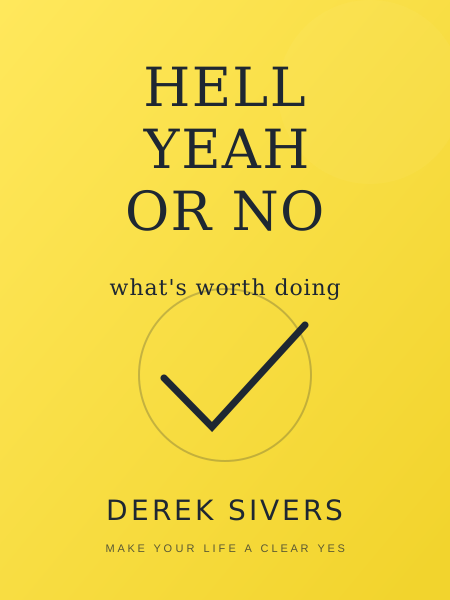
Hell Yeah or No
Derek Sivers · 2020
Editorial rating
- Evidence
- 5/10
- Actionability
- 9/10
- Originality
- 7/10
The thesis
The quality of your life is determined by the quality of your decisions, and the most important decisions are what you say yes or no to. When you're not excited about an opportunity - really excited, "hell yeah" excited - the answer should be no. This filter protects your time, energy, and focus for what truly matters.
Who this is for
Overcommitted professionals drowning in obligations, people-pleasers who can't say no, and anyone who's achieved success but feels scattered and unfulfilled by what they've accumulated.
My favorite quote
If you're not saying 'Hell yeah!' about something, say no.
Why it matters
Most opportunities are fine but not great. Saying yes to "fine" means saying no to the unknown "great" that might come along. Your default should protect space for the exceptional.
Do this
Review your calendar for the next month. Which commitments would you enthusiastically choose again? Which are you dreading? Cancel or renegotiate at least one.
Start here
Your "Hell Yeah" threshold changes with your situation. When you're starting out with nothing, say yes to almost everything - experience is valuable and you don't yet know what you'll love. But once you're successful and have many options, raise your bar dramatically. The more opportunities you have, the more selective you need to be.
Critical summary
Derek Sivers follows up Anything You Want with a collection of short essays on decision-making and priorities. Hell Yeah or No is less about business mechanics and more about the philosophy of choosing - what to pursue, what to avoid, and how to think about the trade-offs.
The book is structured as brief, standalone chapters (most under 500 words) covering topics like saying no, changing your mind, the value of disconnection, and thinking independently. It reads more like a blog archive than a traditional book, which matches Sivers's preference for efficiency.
What it gets right
- The "Hell Yeah or No" framework is immediately applicable and memorable
- Context-dependent advice: the filter changes based on your career stage
- Short format respects the reader's time (practices what it preaches)
- Challenges conventional wisdom with contrarian but defensible positions
What it misses
- The essay format lacks cohesive argument - feels scattered
- Some essays are too brief to fully develop their ideas
- Limited practical guidance on how to actually say no (social scripts, etc.)
- Can feel like warmed-over blog posts rather than new material
Evidence is primarily Sivers's personal experience and philosophy. The ideas are thought-provoking but not empirically validated. Best read for inspiration and perspective rather than systematic methodology.
Key concepts
Hell Yeah or No
If you're not genuinely excited about an opportunity, decline it. Your enthusiasm is information.
No More Yes
Every yes is a no to something else. Be intentional about what you're trading away.
The Threshold Shifts
Early career: say yes to learn. Later career: say no to focus. Your filter should match your situation.
Actions, Not Words
Judge people (and yourself) by what they do, not what they say they value or intend.
Change Your Mind
Strong opinions held loosely. Being wrong is fine; staying wrong is not.
Disconnect to Connect
Being unreachable sometimes allows deeper work and thought than constant availability permits.
Core insights
-
"No" is a complete sentence
You don't need to justify or explain every decline. A simple no is often kinder than a complicated maybe.
-
Your past decisions aren't you
You can change your mind about anything. What you chose before doesn't obligate your future.
-
Success creates its own problems
More opportunity means more filtering required. Guard your focus as jealously as you guard your money.
-
What you do is who you are
Intentions and values mean nothing without action. Your real priorities are revealed by your calendar.
-
Busy is a choice
"I don't have time" means "It's not a priority." Own your choices instead of pretending you're powerless.
Implementation steps
Today
- List 5 things you've said yes to that you're not excited about
- Identify which ones you can exit, delegate, or renegotiate
This week
- Practice saying no to one small request without explanation or apology
- Block 2 hours of "unreachable" time for deep work
This month
- Audit all recurring commitments - which would you choose again?
- Cancel or exit at least two obligations that don't meet your "hell yeah" threshold
Ongoing
- Before each new commitment, ask: "Is this a hell yeah?"
- Regularly recalibrate your threshold based on current opportunities and constraints
Suggested 30-day practice plan
An editorial application plan created by Monolithic Vault - an interpretation of the book's ideas, not part of the original book.
- Day 1
Read Hell Yeah or No (takes under an hour)
- Day 2
Write down everything you're currently committed to
- Day 3
Rate each commitment 1-10 on excitement; flag anything under 7
- Day 7
Decline or exit one low-excitement commitment
- Day 14
Block weekly "unreachable" time in your calendar
- Day 21
Practice saying no to three requests this week (small stakes first)
- Day 30
Review: has your sense of overwhelm decreased? What would you change?
Free PDF summary
Take this analysis with you: a designed two-page field-notes sheet with the thesis, my favorite quote, the key concepts and core insights, and the full 30-day checklist. Print it or keep it - free, no signup.
Go deeper
If this analysis earned your attention, the full book goes further than any summary can. The original is always the primary source.