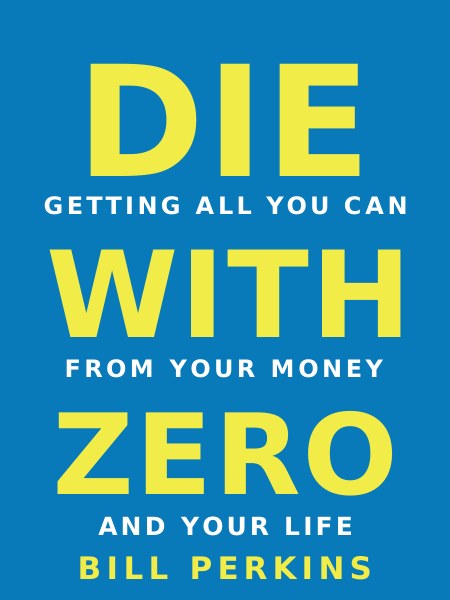
Die With Zero
Bill Perkins · 2020
Editorial rating
- Evidence
- 5/10
- Actionability
- 6/10
- Originality
- 7/10
The thesis
Dying with money in the bank means you traded irreplaceable life experiences for numbers you'll never use. Optimize for maximum lifetime fulfillment by spending your wealth on experiences when you can actually enjoy them - not hoarding it for an uncertain future.
Who this is for
Over-savers and financially comfortable people who've optimized for security but neglected living, especially professionals in their 30s-50s who can't shake the feeling they're deferring joy indefinitely.
My favorite quote
In the end, the business of life is the acquisition of memories. In the end, that's all there is.
Why it matters
This reframes the purpose of wealth accumulation. Money is a means to experiences and memories, not an end in itself.
Do this
Name one experience you've been "saving for retirement" that you're healthy enough to enjoy now. Schedule it.
Start here
Create Time Buckets - divide your life into 5-year intervals from now until expected death. Then map experiences to the buckets when you'll actually be able to enjoy them. A safari at 35 with kids is a different experience than one at 75. Front-load experiences that require health and energy.
Critical summary
Bill Perkins, a hedge fund manager and high-stakes poker player worth an estimated $400 million, argues that most people dramatically over-save. The average retiree dies with more wealth than they had at retirement - meaning they converted precious years of their life into money they never spent.
The core framework involves three resources - money, health, and time - that change in availability throughout life. Young people have time and health but lack money. Middle-aged people have money and reasonable health but limited time. Elderly people have time and money but declining health. The optimal strategy is to spend each resource when it creates maximum value.
What it gets right
- Challenges the "save everything for later" default that dominates financial advice
- Time Buckets framework forces confrontation with mortality and declining capability
- "Memory dividends" concept - experiences compound through recall - is genuinely useful
- Advocates for giving to children and charity when the money has most impact, not upon death
What it misses
- Perkins is worth $400M - his risk tolerance and examples are wildly unrealistic for most readers
- Dropping $100K on a birthday party or renting private islands isn't relatable advice
- Severely understates longevity risk - what if you live to 95 with dementia care costs?
- No practical implementation guidance on safe withdrawal rates or portfolio management
- "Die with zero" requires knowing when you'll die - impossible to execute perfectly
- Implicitly assumes "valuable experiences" require significant money, which isn't true
Evidence is primarily Perkins' personal philosophy and anecdotes. No research citations, no financial modeling. The concepts have merit, but the book doesn't actually teach you how to "die with zero" safely.
Key concepts
Time Buckets
Divide remaining life into 5-year periods, map experiences to when you can best enjoy them.
Memory Dividends
Experiences pay compound returns through remembering them. Earlier experiences yield more total dividends.
Net Worth Peak
Identify when your net worth should peak - ideally well before death, then spend it down.
Give Now, Not Later
Inheritances are most valuable when heirs are 26-35, not when they're 60 and you're dead.
Three Resource Framework
Money, health, time - each varies by life stage. Spend each when it has maximum leverage.
Survival Threshold
The minimum you need to not outlive your money. Everything above this is available for experiences.
Core insights
-
Retirement wealth often grows
Most retirees spend less than they think they will. You're likely over-saving.
-
Health is the binding constraint
You can always make more money, but you can't buy back health or time. Prioritize accordingly.
-
Your 60s aren't your 30s
Stop planning epic adventures for "when I retire." Do them now while you can actually enjoy them.
-
Give with a warm hand
Waiting until death to give inheritances means your children get money when they're 60 and don't need it.
-
Experiences early, comfort late
Front-load experiences that require energy; save comfort spending for when you can't do much else.
Implementation steps
Today
- List 3 experiences you've been deferring "until later" - honestly assess if you're healthy enough now
- Calculate your current net worth and ask: "At what age do I want this to peak?"
This week
- Create your Time Buckets: 5-year intervals from now to expected end of life
- Map your bucket list experiences to the appropriate buckets based on health requirements
This month
- Calculate your survival threshold (basic needs × remaining years + healthcare buffer)
- Have a conversation with your heirs about giving money earlier rather than later
Ongoing
- Annual review: Are you on track to spend down appropriately, or still over-accumulating?
- Question every "save it for later" decision - will "later" actually be better?
Suggested 30-day practice plan
An editorial application plan created by Monolithic Vault - an interpretation of the book's ideas, not part of the original book.
- Day 1
Calculate your net worth, identify your theoretical peak age
- Day 2
Draw Time Buckets on paper - 5-year intervals from now until expected age 85-90
- Day 3
Brainstorm experiences you want, without cost constraints
- Day 7
Map experiences to Time Buckets based on health/energy requirements
- Day 14
Calculate survival threshold (conservative estimate of minimum needed to not outlive money)
- Day 21
Identify one experience to front-load this year that you'd been deferring
- Day 30
Book or commit to that experience; review Time Buckets with partner or advisor
Free PDF summary
Take this analysis with you: a designed two-page field-notes sheet with the thesis, my favorite quote, the key concepts and core insights, and the full 30-day checklist. Print it or keep it - free, no signup.
Go deeper
If this analysis earned your attention, the full book goes further than any summary can. The original is always the primary source.